


ENGLAND ● TACTICAL REPORT (WORLD CUP 2022)
W e kick off our winter World Cup series with one of the most polarising teams entering the competition. England have been on an unprecedented run of results since Southgate took over in 2016 but after an agonising penalty shootout loss to the Italians at Euro 2021, England have endured a long hangover which looms over them going into this year's World Cup.
Southgate himself has somewhat been through a soul searching journey during his tenure. The 2018 World Cup was a pleasant surprise that brought the nation together as England got over their penalty blues and showed a good level of tactical discipline to finish 4th in a tournament not burdened with expectation. What ultimately held England back, was the inability to control possession when ahead and timidness when in tight spaces.
Post World Cup, Southgate seemed to be on a path to get England playing forward thinking and progressive football, but this did not last long. It took a mistake-laden performance against the Netherlands in the 2019 Nations League semi final to derail that train and Southgate reverted back to the safe and uninspiring football that helped them overachieve in Russia.
This theme of pragmatism continued in the 2020 Euros but not did deter England from being able to see games over the line. The Euros was fraught full of turgid football but England managed to nab wins over Germany and Denmark to reach their first final since 1966. This was an opportunity for Southgate to not only validate his philosophy but also to rectify the mistakes he had made against Croatia in 2018. He did neither.
Despite going 1-0 up with the first shot of the game, England curled up into their shell and tried to sit on their lead. Italy equalised and ultimately won it on pens after a disastrous and ill-thought-out selection of takers by Gareth.
Whilst between 2016-2021, results had generally been solid, England are going into the World Cup off the back of a terrible 2022. Winless in their last 6 and with a plethora of injuries in defence, it’s hard to see how a team who should be one of the favourites will get on.

TACTICAL OUTLINE
England have predominantly used the 3-4-3 (31%) and the 4-2-3-1 (17%) in the past calendar year. This has become the norm for Southgate who tends to be very reactive to the opposition team. Whilst there are numerous problems with England's deployment of these systems, it does give them a certain degree of flexibility that other teams do not have.
DEFENCE (STRATEGY AND PERSONNEL)
Intensity of Press/Shape
Out of possession England like to set up with a compact mid-to-high block depending on the opposition. This has been a fairly effective strategy in the past and a reason why in the last 4 years, England have been one of the toughest teams to score against.
However, with an ageing Kane and Sterling, the attack lacks the mobility needed to press effectively from the front. Compounding this issue is the composition of England’s double pivot. One of the midfielders, usually Phillips/Bellingham, will join the press in order to have numerical superiority in the centre of the pitch, especially when England set up in a 3-4-3. This will often leave Rice covering a large amount of space in front of the defence. This is problematic for most players, so imagine the issue it poses to a fairly immobile defensive midfielder. It’s safe to say that England’s defensive solidity has rapidly disintegrated over the calendar year, most evident from their recent Nations League Campaign.
Negative Transitions
If teams do manage to bypass England’s press (which is a regular occurrence these days), the defence often has enough numbers to deal with the on rushing attackers but can be exposed if it’s a fast transition. This is indicative of the fact England usually play with 3 CBs, all of which aren’t blessed speed wise (unless Walker plays RCB), so they tend to step off to give themselves space. This again compounds the issue of England’s press, as large gaps are made between the midfield and defence. Furthermore, the lack of CBs willing to step up often leaves Rice with more leg work to do in the middle of the park.
Aerial Prowess
Aerially, England are fairly formidable and it’s probably the best aspect of their defence. With Maguire still considered an integral part of the England set up, the team is well equipped to deal with balls over the top, long goal kicks and crosses into the box. It is worth noting however that Stones and Walker who are likely to start ahead of the likes of Dier are not as strong in the air but are nevertheless fairly reliable.
With the ball, England have the technical prowess and composure to play comfortably out of the back. Stones and Walker provide the ability to bring the ball forward with their dribbling and Maguire, when on form, can hit a variety of passes that aids moving the ball forward in a progressive manner. Pickford and Ramsdale are also very proficient at short, medium and long range passing, especially the latter who has helped transform Arsenal’s ability to construct moves from the back.
Goalkeepers
The depth of Goalkeepers is a positive for England going into the tournament. Whilst not possessing a world class roster, England now have keepers who are vocal and have the character to enjoy the pressures of wearing the three lions badge and live for the big moments, an important trait in tournament football. Expect Southgate to stay with the tried and tested Pickford.
Injury concerns
Across the defence, England are in panic stations with regards who will be fit and available for the World Cup. Reece James, Ben Chilwell and Kyle Walker are currently injured, and it is difficult to forecast whether they’ll be back in time for the tournament. On top of this, Trent Alexander-Arnold has hit the worst form of his career and looks lightyears away from being a key player for the defence. For a position that was so stacked last year, it is very concerning to see it vaporised in a matter of weeks, especially since Walker and James crossover into the centre back region.
Selection
At the moment, the most sure bet at right back would be Trippier who has returned with a bang this season after breaking his foot in February. Whilst it’s far from ideal, Trippier is a solid fullback, who can also play to England’s strengths at set pieces - although we would advocate a shift to a back 4 if this was to happen. Luke Shaw is beginning to recover some form and fitness and with Chilwell’s injury seems a shoe in for a starting berth. Centre back, makes for even more grim reading. Currently, England’s core is reliant on Stones and Dier. Maguire looks like a shell of himself and Coady/Mings are not good enough for any credible team looking to win the World Cup.
Expect… To see Pickford start, with Stones and Shaw being the main shoe-ins for a starting berth. If Walker is injured, we may see an uncharacteristic late switch to a back 4, with Maguire and Trippier completing the backline. Trippier may also feature as a wing back in a back 5 next to Walker.

ENGINE ROOM (STRATEGY AND PERSONNEL)
Stagnant Possession
England tend to have more of the ball under Southgate, averaging just above 50% possession depending on the opposition. Historically, against better sides on the ball, England would cede possession but teams have caught on to England’s laboured build up as a way to stifle them, so the possession numbers can be a red herring.
Talking about build up, Southgate has yet to address the issue which has plagued his tenure since its beginning: how to set up an effective midfield. England are in dire need of better and frankly visible solutions when playing out the back. Before, we praised the fact England are blessed with defenders who are comfortable with the ball at their feet. However, due to the set up further up the pitch, most build up patterns descend into a defence-exclusive rondo until: (1)The opposition makes a mistake or gets impatient, leaving a gap for a progressive pass or (2) The ball gets lumped forward in the hope a second ball opportunity will serve as a progressive move.
With Kalvin Phillips most likely set to miss the World Cup through injury, England lack any players who can collect the ball from the centre backs and are often left in a quandary loop.
Rice Falters In Build Up
This leaves a lot of responsibility on the shoulders of Declan Rice. Whilst he has somewhat improved in getting involved in the build up, ranking in the 82nd percentile in the Premier League for Live-Ball touches last season, his passing game is fairly passive and risk averse. He lacks the ability to take passes under pressure, often playing it back or into danger.
Overall his passing has no nuance and he never looks comfortable when playing on the half turn. This is particularly an issue when playing a back 3, where it is imperative that the midfielders in front are ball players and progressive in nature. Having a 4th central defender in terms of ball playing ability i.e. Rice is asking for England to be penned in.
Furthermore, Rice has recently developed into a more proactive midfielder, rather than a holding one, often getting involved further up the pitch for West Ham. In fact, when the play is ahead of him, Rice’s passing is very effective, not too dissimilar to Casemiro. However, for a player who will be expect to cover a lot of space defensively in front of the defence, it is a pretty terrifying prospect that his intuitions are to bomb forward and not hold station, thus depriving England of a backboard to bounce the ball back off.
Build Up Solutions?
This is not aided by the fact that Bellingham is another midfielder who doesn’t excel in the build up. At least compared to Rice, Bellingham has the ability and mentality to be a progressive mover of the ball, whether that be with his passing or dribbling. However in our opinion his best form has come as an advanced 8 who looks to ghost into goal scoring positions. He is a next gen Frank Lampard, someone who also struggled in the build up phase.
Is there a solution to the lack of progression, pausa and press resistance in the ‘4’ zone ahead of the defence? One radical solution may be to put the likes of Foden/Maddison/Grealish as one of the 8’s in a midfield three and ask them to drop deep to collect the ball off the defenders thus taking the burden off Rice and Bellingham’s shoulders. If England went that route and still kept a back 5, perhaps Rice could be excluded entirely and another mobile yet industrious midfielder like a Mount could help forge a modern, fluid yet dynamic midfield unit.
Mount is a multifaceted player and will always work hard for the team. Southgate seems to trust him but I feel he is deployed incorrectly when used. As said before, England would benefit from more dynamism in midfield in the 3-4-3 or at least Mount could be an option as one of the forwards, like he is for Chelsea. However, he is predominantly used as a #10 in the 4-2-3-1. This often leads to Mount being on the periphery of games and at least for England, is a waste of his skillset.
Lack Of Depth?
With regards to the rest of the midfield options, Henderson and James Ward-Prowse don’t offer much. Starting with Henderson, his legs are beginning to betray him. For a player who’s best asset is his physicality, one which allows him to affect play further up field, it wouldn’t make sense to expect much for him at this point in his career.
As for James Ward-Prowse, the less said the better. Yes, he provides a fantastic threat from free kicks and corners, but to call up a player on the basis of dead ball situations would be a mockery. These attributes are a bonus but shouldn’t be the main prerequisite for selection. Otherwise we would’ve had a legendary combination of Rory Delap and Vuvuzelas etched in our memories of South Africa 2010.
Expect… England to go with Rice and Bellingham as their midfield two. If Mount starts, it will be as a #10 but there’s potential scope for him playing deeper if England are chasing the game. Henderson and JWP to have limited minutes for tired legs at the end of games.
WIDTH (STRATEGY AND PERSONNEL)
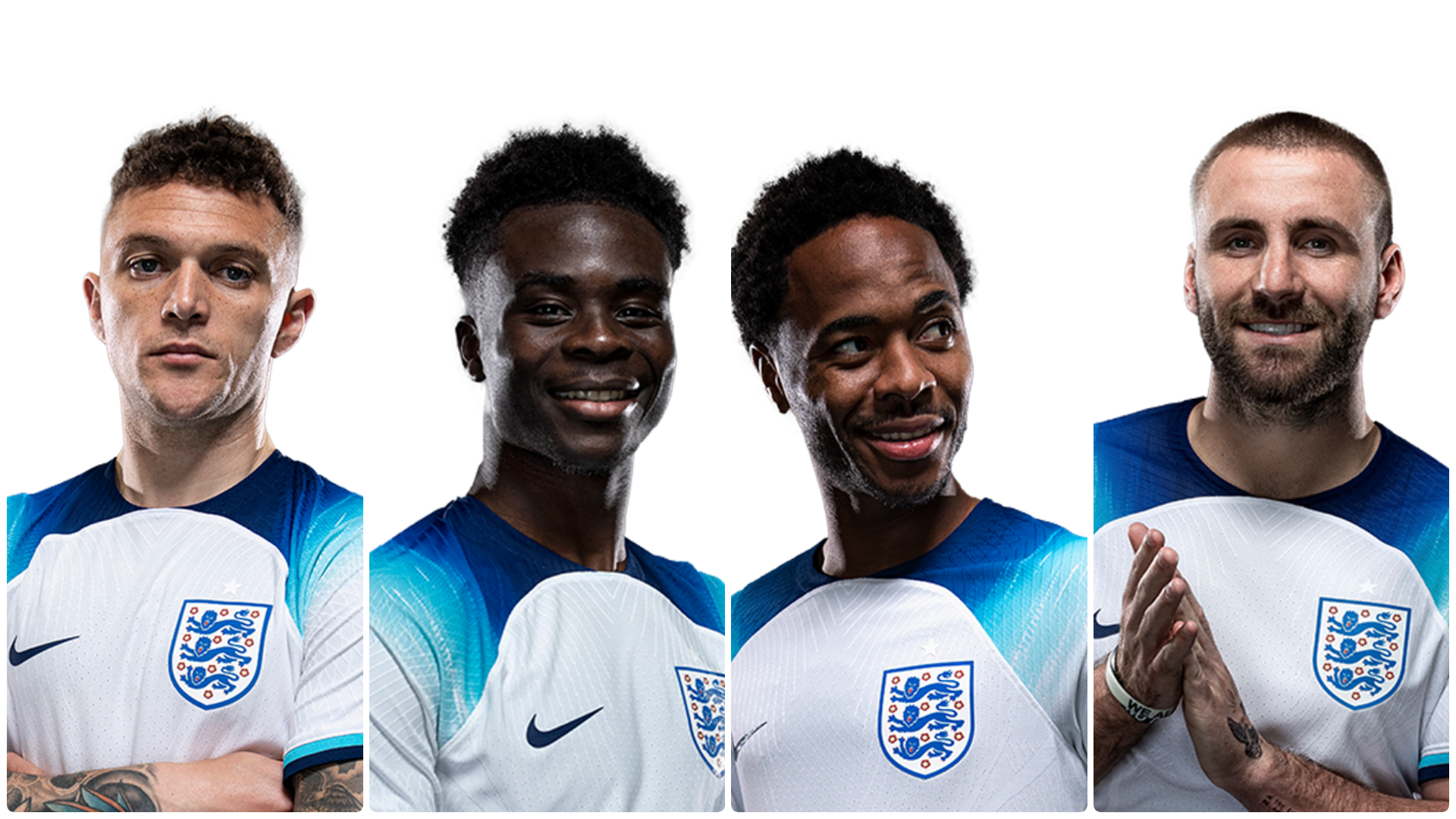
Whether it is a 3-4-3 or a 4-2-3-1, with the absence of James, and the likely exclusion of Trent Alexander-Arnold, it is likely that any natural width for England will likely come from their left flank and from the delivery of Luke Shaw. Most of England’s options from the right flank are inverted or defensive full backs, thus we are concerned about the lack of true ‘wingplay’ from both flanks in this squad.
Right Flank
With Trippier likely to start at right back/wing back, it’s important for England to have a player that dovetails nicely with Trippier’s more conservative approach. Whilst Trippier can provide an overlapping option, he favours crossing from deeper positions rather than the byline.
Saka looks to have the right wing position earmarked for him. Whilst not a key player for England, he has proven to be effective in a broken system and his running in behind is crucial for England if they are to succeed. With Trippier behind, Saka will have more licence in attack and should look to play as high and wide as possible to complement Kane’s tendency to drop deep.
Foden is another option for the right side of the pitch. Despite having most of his success at City playing on the left, Southgate seems adamant that Foden plays in the right wing position or as a #10 if Mount isn’t available. Foden is a great facilitator in a fluid and functioning system but with England he rarely has this luxury. England will need a wide presence who can hug the touchline and it’s easy to see how Foden would be wasted there.
Left Flank
Shaw reached world class levels at the European championships but comes with many caveats. Firstly, will he be motivated? If not he shouldn’t even be on the plane. A lot depends on Ten Hag's ability to cure United’s toxic dressing room and whether that will rub off on Shaw. Secondly, even if Shaw is mentally prepared, will his fitness levels be high enough to cope with the temperatures in Qatar. The average high from November - December varies between 30-25C, so a lot will be demanded from the already overloaded players.
Sterling looks to be the main contender for the left wing berth, with Rashford being a wildcard should the game situation need it. Sterling is Gareth’s expected choice but he is in terrible form and looks past his prime. This is a concern as Kane is short of pace and desperately needs runners off him - with options few and far between, Rashford arguably looks the best tactical fit but does he have the requisite quality?
An alternative contender is Jack Grealish who provides the X-Factor that England might desperately need should they go behind or find themselves in a stalemate. A player who was flavour of the month last year but has since been casted aside for a somewhat underwhelming move to City, Grealish has a chance to win English hearts back and become the nation's sweetheart again.
Expect… Trippier and Saka to provide a sound threat on the right, with a mixture of crosses, dribbles and late runs in behind. Sterling to start but with Shaw behind him as Southgate has a tendency to pick players within his comfort zone. Likely to be less effective as Shaw and Sterling will clash over the left half space. Rashford and Grealish to serve as remedies off the bench.

CENTRAL CREATIVITY (STRATEGY AND PERSONNEL)
Despite some of the turgid football we’ve seen from England this year, I think it would be unfair to completely dismiss their creative potential. In fact, we’re of the opinion that in the right set up, England has some of the best range of creative players available, compared to other nations. Mount, Foden, Saka, Grealish, the neglected Maddison and even Kane can unlock a defence in a multitude of ways and England should not neglect this, if they are to be successful.
Go To Creative Threats
Mount, as mentioned earlier, provides a lot of dynamism should he start. His ability to split defences open with through balls (as evident from the 2021 UCL final) is a handy trait for transitional attacks, especially if it’s Saka or Rashford running on the end of them. His movement is also excellent, allowing him to take up positions to generate high xG chances for others although this is subjective based on his position.
Kane is another player who excels at turning the opposition around with passes in behind. This is also complemented by his ability to hold the ball up and lay it off to others. Kane should provide a backboard for other attackers should they need to play themselves out of a tight situation. This will be important for combination play further up the pitch when breaking down a low block defences that teams like Iran and Wales should employ against England.
Whilst we discussed the Saka v Foden debate at RW, before, what shouldn’t be overlooked is the options both can provide purely from a creative perspective. Saka is a very direct carrier of the ball and whilst he’s not a volume dribbler, he’s great at bringing the ball into the penalty area or threatening positions. Foden has the ability to be direct with his dribbling should he need to, but his skills lie in his passing and general link up play. Off the bench, he could be a great option to close out games or provide a further thorn against sides sitting in a low block as he excels in tight spaces.
The Dark Horse
An option that Southgate has never taken seriously is James Maddison. In our opinion he is arguably England’s truest number 10 and possibly the most natural ‘assist’ king they have and especially in a rather narrow set up, his ability in tight spaces is invaluable. In a 4-2-3-1 or a 3-5-2, he would be a wonderful tactical fit as the 10 and he showed he can excel in knockout football, as he proved in Leicester’s European campaign last season.
Lastly, it would be dismissive of us to overlook the creativity England can generate from set pieces. If there’s one thing England can do well, it’s scoring from dead ball situations. With Trippier, Mount, Maddison and Saka, they have deadly deliveries awaiting absolute colossuses in the air. Kane and Maguire provided a consistent threat during the World Cup Qualifying campaign, so it was no surprise they topped the goalscoring charts for England.
Yes, corners and free-kicks generate low xG chances but International football is all about marginal gains. With less time on the training ground and more pragmatic football, teams have to find gains where they can and England have a genuine threat that can bail them out of a bad situation.
Expect… England to be reliant on set pieces like in previous tournaments. Saka, Grealish and Foden play a key role in stretching the opposition and cement themselves as England’s main creative threats in open play alongside Kane.
PENALTY AREA (STRATEGY AND PERSONNEL)
Kandependency
Maybe you were feeling optimistic about England’s hopes after reading the last section but now that’s about to fade away when we consider the most important part of the game: putting the ball in the back of the net.
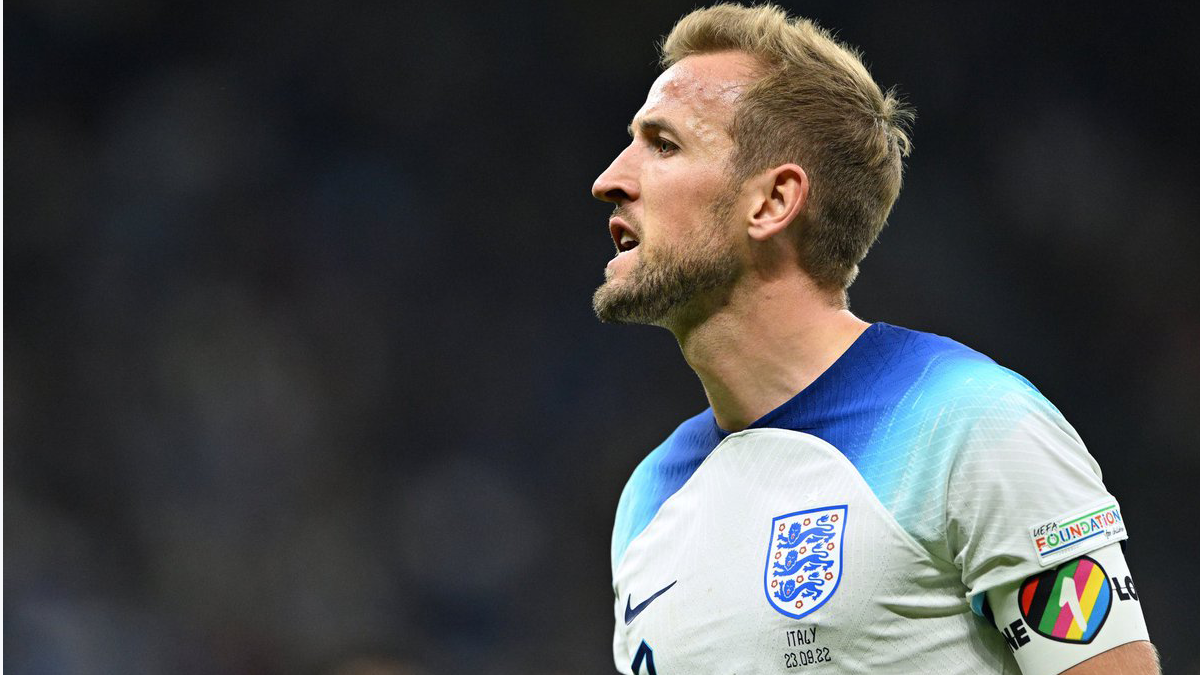
What worries us most about England, is how reliant they are on Kane. It gets even more worrying when you realise that a lot of Kane’s goals come from penalties or dead ball situations. But when you dig deeper it becomes more apparent. Kane, just simply, isn’t there where you need him to be.
One theme I remember vividly of Euro 2020, was Kane's abysmal timing of when to drop and when to hold a high position. Often, Kane would involve himself in the build up when the ball was in the first/middle third and then by the final third was nowhere to be seen in the box. It should be the other way round!! So that begs the question, who will be there?
Calvert-Lewin and Ivan Toney could provide great alternatives off the bench but the former is unlikely to be fit enough to handle the rigours of tournament football and the latter is very unlikely to get a sniff at getting picked which is a shame as he has the arrogance, athleticism and natural instincts in the box to trouble even the best defenders. Wilson is a decent substitute to throw off the bench but unlikely to frighten the opposition if he is to replace Kane full time in the case of an injury.
Wide Goal Threats
Saka, as pointed out, can run in behind and be a menace, but this is purely from a creative point of view. In terms of putting the ball in the back of the net, Saka's shooting technique and proficiency is fairly poor. He also isn’t that killer wide forward you need to dovetail with Kane.
Sterling on the other hand used to be that threat but he lacks the vivid dynamism he was once famed for. Therefore, although we may have some runner’s in Sterling and Saka, none of them are well suited to being our #1 goal threat. Could Rashford’s ability to make runs in behind make him a key counter attacking threat in the big games? If he fails to deliver, it becomes less and less apparent where England will get their penetration from.
Expect… Kane to drop frequently and look for Saka and Sterling ahead of him. Rashford to potentially feature as a last throw of the dice.
 PREDICTED XI


PYTHAGORAS PERSPECTIVE
Southgate has received an unfair amount of criticism for a man who has taken England to a World Cup Semi Final and then followed it with a European Championship final. By any standards that is incredibly impressive.
Having said that, the stalwarts that Southgate has relied upon are increasingly fraying at the edges, with Walker, Maguire, Kane and in particular Sterling looking like physically diminished versions of themselves. Southgate’s reluctance to truly freshen up the side may come back to haunt him.
With Reece James and Chilwell unfit, it truly throws a spanner in the works from a tactical point of view. Other issues England have to contend with is that Kalvin Phillips has barely kicked a ball in anger, thus leaving England’s build up play from zone 4 much to be desired.
With a cohesive lineup not really put together by Gareth in the past year, we can’t see this team progressing further than the semi finals at a maximum and more likely it is a round of 16/quarter-final exit against one of the favourites of the tournament. On the plus side, the squad is simply too strong, united and experienced for a group stage or loss to a minnow, so it will take a big hitter to take them out and it will most likely be a narrow loss.

Sound Engineer | Studying MSc Big Data Science | Tactics Nerd and United Fan (These are not mutually exclusive!)


